The short version
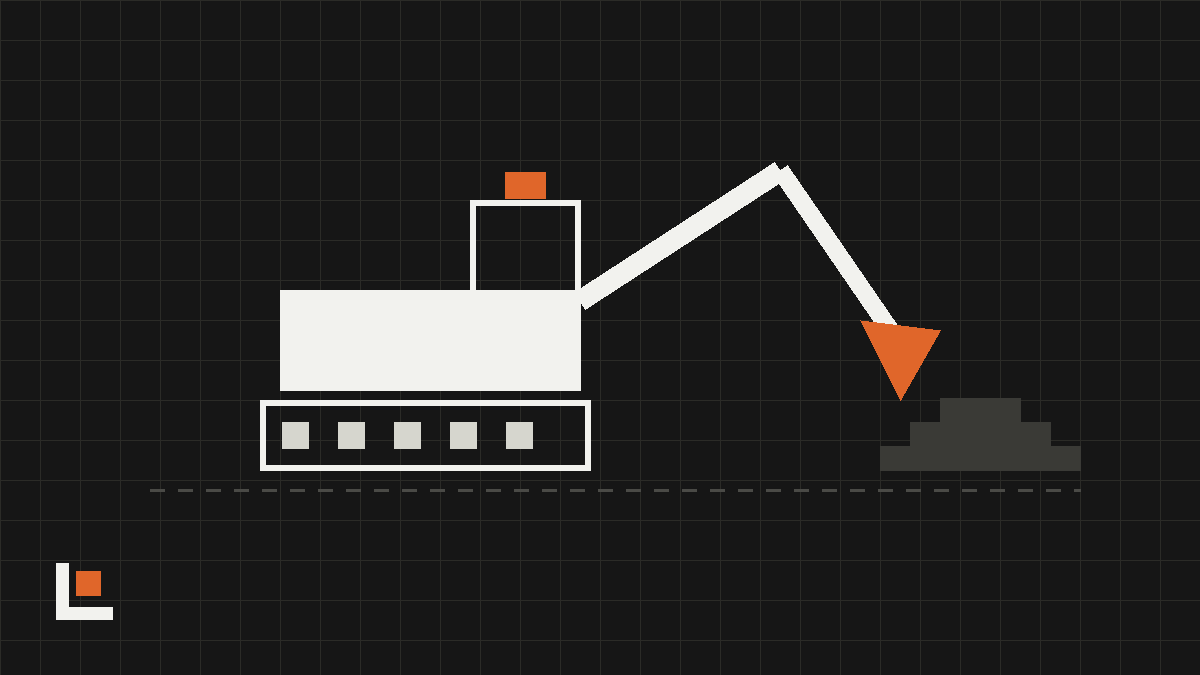
- Bedrock Robotics retrofits existing excavators with sensors and onboard computers so they can dig on their own, with no one in the cab.
- Since August its machines have done paid, operator-out work for contractors including Sundt and Zachry. In October it raised $600 million at a $4.1 billion valuation.
- This is aimed at large earthwork today, but it’s the clearest sign yet that autonomy is moving from software into heavy equipment.
Most AI news in construction is about software: agents that review submittals or draft estimates. Bedrock Robotics is working on the machines themselves. The company was founded in 2024 by engineers who had worked on Waymo’s self-driving cars, and in 2026 it went from supervised testing to excavators working on their own on paying jobs.
What Bedrock built
Bedrock’s system, called Bedrock Operator, adds LiDAR, GPS, cameras and an onboard computer to machines a contractor already owns. Bedrock says it installs in a day with no permanent changes to the machine.
- A site manager sets the plan for the work.
- The machine maps the site, plans its own moves and digs.
- It works alongside other equipment with no fences or barriers.
- If a person or anything unexpected gets too close, it stops until the area is clear.
Bedrock started with excavators because they’re the most complex and most used machine on most sites. It plans to add dozers, loaders and dump trucks so whole fleets can work together.
Want this working in your company? Book an AI discovery and we’ll show you where AI fits your office first.
Where it’s working
On August 17, Bedrock announced its first fully autonomous, operator-out work on customer sites, after about a year of running under human supervision:
- A water treatment facility in Nevada, with Sundt Construction.
- A multi-million cubic yard earthwork site in Texas, with Champion Site Prep.
- A 1.2 million cubic yard civil sitework project with Zachry Construction.
On October 29, Bedrock announced a $600 million Series C led by CapitalG and Emergence Capital, valuing it at $4.1 billion and bringing its total funding to nearly $1 billion. It named new customers across the country, including C.W. Matthews in Georgia, B&S Site Development in Virginia and Smith Trucking in Florida. Haydon, an Arizona general contractor, is running it on a remote Texas site and plans to test trench work next.
What it means for site contractors and builders
The pitch is about labor. The Associated General Contractors of America reports that 87% of construction firms have open hourly craft positions, and most say those jobs are as hard or harder to fill than a year ago. A machine that digs a planned cut while one person supervises changes what a crew can take on.
For now, this is large earthwork on big commercial, civil and industrial sites. A typical residential lot or remodel is a long way off. But the direction matters for anyone who hires site work:
- Expect autonomous equipment to show up first on large grading jobs, like data centers, plants and water projects.
- The operator’s job shifts toward planning the work and watching several machines.
- Good site data becomes more valuable. These machines work from a plan, so clean surveys and grading plans matter more.
- If you run site work, ask your equipment dealer and peers who’s testing autonomy in your region.
Questions
Is anyone watching the machine?
Yes. A site manager sets the plan, and the machine stops on its own if a person or object gets too close. Bedrock hasn’t said publicly how many machines one person can supervise.
Can a contractor buy Bedrock’s system?
Bedrock works directly with contractors as deployment partners and hasn’t published pricing. Contractors interested in it would contact Bedrock.