The short version
- Robots already do parts of the trades: printing layout, tying rebar, finishing drywall, lifting block and framing walls in factories. Most make a crew faster rather than replace it.
- For homebuilders, the biggest change coming in 2027 is factory framing. D.R. Horton signed on to have more than 1,250 homes framed by Promise Robotics’ factories, with production starting early next year.
- Humanoid robots that can walk onto a site and do any trade are still demos. Plumbing and electrical rough-in have almost no robots working yet.
You’ve probably seen the videos: a robot hanging drywall, an arm stacking block, a humanoid climbing a ladder. Some of those machines are working on real jobs today. Others are a demo and a funding round. If you run a construction company, the difference matters.
The push is coming from the labor market. Associated Builders and Contractors estimates the industry needs to bring in about 349,000 new workers in 2026 and 456,000 in 2027, mostly to replace people retiring. The National Association of Home Builders says labor shortages cost builders about $11 billion a year and add roughly two months to the average build. That’s the problem nearly every company below says it’s solving.
We looked at each trade the same way: what the robot actually does, who’s using it, how a contractor gets one and how far along it really is. Each gets one of three labels: on job sites now, in pilots or still a demo. Performance figures come from the companies unless we say otherwise.
The scorecard
| Trade | Who’s doing it | Status | How you get it |
|---|---|---|---|
| Framing | Promise Robotics, Reframe Systems | Factories running, new plants opening | Buy framed panels; your crew sets them |
| Layout | Dusty Robotics, HP SitePrint | On job sites now | Buy or rent; one operator |
| Drywall finishing | Canvas (now JLG), Origin | On job sites, small fleets | Robot plus operator, as a service |
| Rebar | Advanced Construction Robotics | On job sites now (bridges and roads) | Buy or rent |
| Masonry | Construction Robotics, Monumental, FBR | Lift assist on sites now; robot bricklaying in Europe, early in the US | Rent a lift assist; hire Monumental as a sub |
| Overhead drilling | Hilti Jaibot | Sold for commercial interiors | Through Hilti |
| Site walks | FieldAI | In use with some GCs | Through FieldAI |
| Humanoids | Figure and others | Still a demo | Not available for job sites |
Not ready for robots? Start in the office. Most builders get their first AI payoff in estimating, scheduling and billing. Book an AI discovery and we’ll show you where.
Framing: robots in factories, not on your lot
Status: Factories running, with new plants opening in 2026 and 2027.
The framing robots that matter right now don’t walk onto a job site. They work in factories, building wall panels, floor systems and stairs that get trucked to the lot and set by a crew.
- Promise Robotics turns a builder’s existing plans into instructions for robotic factories, then ships framed components to the site. In October, D.R. Horton, the country’s largest homebuilder, signed a multiyear deal covering more than 1,250 homes, with production expected to start in early 2027. Promise says it can produce the framing for a typical two-story, 1,800-square-foot home in about eight hours. That’s framing only, not the whole build.
- Reframe Systems runs robotic microfactories that frame, sheathe and insulate walls for single-family homes, townhomes and small multifamily buildings. It raised $40 million this year and opened a plant in Billerica, Massachusetts, in October, designed for up to 250 homes a year.
What it means for you: framing crews don’t disappear. Someone still sets panels, ties them together and handles everything the factory can’t. But the schedule changes. One California layout and panel contractor says combining printed layout with precut lumber and prefab walls cut his shell schedule from about 21 days to 11 or 12.
Layout: the easiest robot to try today
Status: On job sites now.
Layout robots print the floor plan, full size, directly onto the slab or deck, so trades aren’t snapping lines and measuring off drawings.
- Dusty Robotics prints from a coordinated building model, marking walls, openings and trade locations for multiple trades in one pass. Dusty says one operator can lay out 10,000 to 15,000 square feet a day.
- HP SitePrint works from a standard CAD file and a robotic total station, and handles rough surfaces and small obstacles. HP claims up to ten times the productivity of manual layout.
Why it’s first: layout is precise, repetitive and easy to check, so mistakes show up before anyone builds on them. It’s also one of the few robots on this list a mid-size contractor can buy or rent and run with one trained person.
Drywall finishing: the trade robots are furthest into
Status: On job sites, in small fleets.
Finishing drywall is slow, dusty and hard on shoulders, which is exactly why it attracted robots early.
- Canvas built a compact robot that sprays joint compound and sands with dust capture, and says it cuts finishing time from about five days to two. Lift maker JLG, part of Oshkosh, bought Canvas in January and plans to pair its technology with JLG lifts for interior work.
- Origin came out of stealth in October with $20 million and a robot called OG-1 that applies compound, sands and primes. It’s rented with an operator rather than sold, and Origin claims about 20% savings against current labor costs. It’s small so far, with four robots working, and plans taping, hanging board, installing studs and drilling for conduit on the same machine next year.
Rebar: proven on bridges
Status: On job sites now.
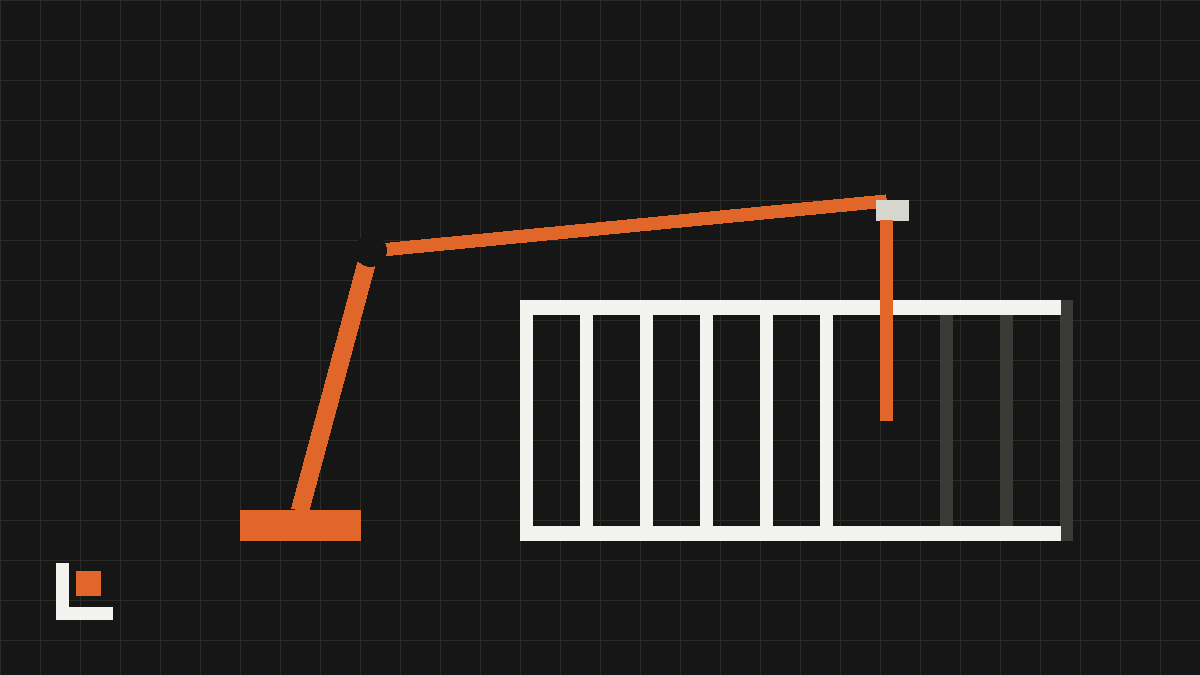
TyBot, from Advanced Construction Robotics, rides a gantry over bridge decks and ties rebar intersections, at more than 1,200 ties an hour on the current model. It’s been deployed on more than 65 projects, and the company says customers save at least 25% on installation. It’s built for roads and bridges, not houses, but it’s one of the clearest examples of a robot becoming a normal tool for a trade.
Masonry: lift assist now, robot bricklayers coming
Status: Lift assist on job sites now. Robot bricklaying working in Europe and early in the US.
- Construction Robotics’ MULE doesn’t lay block. It takes the weight, up to 150 pounds, so a mason can place heavy units alone. Contractors have reported productivity gains of 40% or more on large, open walls. It’s less useful on tight sites and corner-heavy work.
- Monumental, based in Amsterdam, runs small electric robots that lay brick with ordinary mortar. It says more than 150 of its robots are on job sites in Europe. It raised $32 million in July and is launching in the US, starting with Texas, Florida, Virginia and Arizona. It works like a masonry sub: contractors get a price per brick or per square meter.
- FBR’s Hadrian X is a truck-mounted arm that lays large blocks. It’s been building demonstration homes in Florida, but at close to $6 million a machine, it’s a very different business from the others.
Overhead drilling and site walks
Status: Jaibot is sold for commercial interiors; FieldAI robots are in use with some GCs.
- Hilti’s Jaibot drills ceiling holes for mechanical, electrical and plumbing trades from the building model, and marks each hole by trade. A worker guides it, and it takes over the most punishing overhead work. Hilti introduced it in 2020 for commercial interior projects.
- FieldAI puts autonomous robots on job sites to walk the work, document progress and flag missing work or safety issues. Big-D Construction says every one of its projects will have some FieldAI tools.
Plumbing, electrical and HVAC
For the trades that run pipe, wire and duct, there’s very little robotics doing the actual installation yet. The exceptions are drilling robots like Jaibot and companies like Origin planning conduit work next year. Rough-in happens in tight, irregular spaces with constant judgment calls, which is the hardest environment for a robot.
Humanoids: the long game
Status: Still a demo.
Humanoid robots get the most attention. In August, Figure showed its newest robot climbing a ladder on its own, and it has reportedly delivered more than 350 units. But none of that is construction work yet. Figure lists construction as a possible future use, not a current one, and hasn’t published success rates for the ladder demo.
The general-purpose robot that walks onto a site and frames, hangs board or runs conduit is the long-term story. It’s not something to plan your 2027 crew around.
What this means for a builder or trade shop
- Expect more factory-built parts. Panelized framing is moving from custom projects into production homebuilding. If you set panels instead of stick framing, your schedule, crew size and inspections change.
- Try layout first. It’s the most accessible robot for a mid-size company and the easiest to measure.
- Rent, don’t buy. Most of these come as a service with an operator, so you pay per job instead of buying a machine you have to keep busy.
- The repetitive, heavy, dusty work goes first. Drywall finishing, overhead drilling and lifting block are where robots are making the most headway. Judgment, problem solving and finish work stay with people.
- Check the numbers. Almost every speed and savings figure here comes from the company selling the robot. Ask for references from contractors who’ve used it on a job like yours.
Questions
Will robots replace construction workers?
Not in the next few years. The robots working today each do one task and still need trained people to set up, run and check them. Most companies pitch them as a way to get more work done with the crews you have, and with hundreds of thousands of workers needed, that’s the more realistic near-term picture.
Can a small builder or contractor use any of this today?
Yes, a few. Layout printing is the easiest to rent or buy. A masonry contractor can rent a lift assist. Factory-framed panels are available where a plant serves your area. Most of the rest is sold as a service on larger commercial jobs.
What do construction robots cost?
It varies widely, and many companies don’t publish prices. Several rent the robot with an operator and quote per job, per square foot or per brick. One truck-mounted bricklaying machine costs close to $6 million, which shows why most companies prefer the service model.
When will humanoid robots work on job sites?
No one has a firm date. Humanoid companies are showing tasks like climbing ladders and carrying parts, but none have published results from real construction work. The single-task robots in this post will do far more on job sites over the next few years.
Sources
- Construction Dive: Construction worker demand in 2026 (ABC)
- PYMNTS: Homebuilders turn to robots as crews run short
- HousingWire: D.R. Horton and Promise Robotics
- The Realty Today: D.R. Horton partners with Promise Robotics
- Pulse 2.0: Reframe Systems Series A
- Walls & Ceilings: Dusty Robotics second-generation robot
- HP: How SitePrint works
- The Robot Report: Canvas compact drywall finishing robot
- ENR: JLG buys Canvas
- Forbes: Origin drywall robot raises $20 million
- Power Progress: Third-generation TyBot
- Masonry Magazine: Robotic assisted lifting
- Fortune: Monumental raises $32 million
- The Robot Report: First Hadrian X arrives in the US
- Construction Dive: Hilti unveils Jaibot
- FieldAI: Inside Big-D Construction’s expansion
- TechRepublic: Figure 03 climbs a ladder autonomously